
Relocating to the Bay Area for a Tech Career—Without Losing Sight of the Community You’re Joining
Starting a new technology role in the Bay Area can be an exciting turning point. The region offers access to some of the world’s most influential companies, ambitious professional networks, and communities shaped by innovation, creativity, and cultural diversity.
But relocating here is about more than choosing the shortest commute or finding the newest apartment. Every neighborhood has its own history, long-term residents, small businesses, traditions, and challenges. A thoughtful move means finding a home that supports your career while also respecting and contributing to the community you are joining.
Begin With More Than Your Office Location
For many technology professionals, the first instinct is to search as close as possible to the workplace. Commute time matters, but it should not be the only factor shaping your decision.
Consider the full rhythm of your daily life:
- How often will you work in person?
- Will your employer provide transportation?
- Do you prefer walking, cycling, driving, or public transit?
- What kind of neighborhood atmosphere feels comfortable?
- How important are parks, restaurants, schools, or community spaces?
- Do you expect your role or work location to change?
A home that supports your broader lifestyle may serve you better than one chosen only for proximity to an office.
Understand That the Bay Area Is Not One Market
The Bay Area includes many distinct cities and neighborhoods, each with different housing types, transportation options, price points, and community identities.
San Francisco offers dense, walkable neighborhoods with strong transit access. San Jose and the South Bay provide proximity to major technology campuses and a wide range of residential communities. The Peninsula connects employment centers with established neighborhoods, while the East Bay offers urban districts, suburban settings, and access to regional transit.
There is no universally “best” place to live. The right choice depends on your work schedule, budget, housing needs, and the kind of community you want to be part of.
Learn the History of the Neighborhood
Before choosing a home, take time to understand the area beyond its current real estate listings.
Many Bay Area neighborhoods have been shaped by generations of immigrant families, working-class residents, artists, educators, and local business owners. Rapid investment and rising housing costs have created opportunities for some residents while making it harder for others to remain in the communities they helped build.
Learning about a neighborhood’s history can help you make a more informed and respectful decision. Read local publications, visit community organizations, attend neighborhood events, and talk with residents and business owners.
This is not about feeling guilty for moving. It is about arriving with awareness.
Support Local Businesses and Institutions
One of the most direct ways to contribute to your new community is to support the people already invested in it.
Choose locally owned restaurants, shops, service providers, markets, and cultural spaces when possible. Participate in neighborhood events and learn which organizations are working on housing access, youth programs, food security, education, and small-business support.
Community participation does not require a large public gesture. Consistent everyday choices can help strengthen the local economy and preserve the character that made the neighborhood appealing in the first place.
Be Thoughtful About Housing Competition
Relocating professionals often enter the market with strong salaries, employer benefits, and flexible budgets. That can create an advantage in both rental and purchase situations, especially in areas where housing supply is limited.
A responsible approach does not mean ignoring your own needs. It means understanding how your decisions fit into a larger housing environment.
Work with professionals who can explain local market conditions, tenant protections, ownership structures, and neighborhood trends. Avoid treating homes as interchangeable investment products without considering who currently lives there and how rapid turnover may affect the surrounding community.
For buyers considering rental income, accessory dwelling units, or multi-unit properties, it is especially important to understand local regulations and the responsibilities that come with becoming a housing provider.
Avoid Viewing Neighborhood Change as a Blank Slate
Terms like “up-and-coming” can unintentionally suggest that a neighborhood only became valuable when outside investment arrived.
Most communities already have value. They have residents, relationships, cultural institutions, and businesses that may not appear in a standard relocation guide.
Instead of asking only where property values may rise, ask:
- What makes this community meaningful today?
- Which residents and organizations have shaped it?
- How can I participate without trying to remake it in my image?
- Are there local efforts I can support?
- What changes are residents already advocating for?
This approach can help you become a neighbor rather than simply a new occupant.
Use Your Workplace Benefits Carefully
Some technology employers offer relocation allowances, home-buying assistance, temporary housing, or access to preferred lenders and agents. These resources can make a move easier, but they should be reviewed carefully.
Employer-recommended services may be convenient, yet they may not always provide the widest range of options or the deepest local knowledge. Compare providers, understand any incentives, and make sure the professionals you choose are focused on your long-term interests.
Your housing decision should remain yours, even when your employer is helping fund the move.
Consider Renting Before Buying
For professionals new to the region, renting first can provide valuable time to understand commute patterns, neighborhood culture, and long-term career plans.
A temporary rental may help you learn:
- How often you actually travel to the office
- Which transit routes are reliable
- Where you spend your time outside work
- Whether you prefer city, suburban, or mixed-use living
- Which communities feel like a natural fit
Buying immediately can make sense in some situations, but taking time to learn the region can prevent an expensive decision based on limited experience.
Think Beyond Resale Value
Strong resale potential is important, but it should not be the only measure of a good housing decision.
A home should also support your well-being, relationships, and connection to the area. Consider whether the property and neighborhood will still work if your job becomes remote, your company changes locations, or your personal priorities evolve.
The best long-term choice is often a home that fits your life independently of one specific employer.
Participate as a Resident, Not Just a Consumer
Living in a community means more than using its amenities.
Learn how local government works. Follow neighborhood planning decisions. Attend public meetings when housing, transit, parks, or development proposals affect your area. Listen to residents whose experiences differ from your own.
Technology professionals can bring useful skills to local organizations, including communications, design, data analysis, mentoring, and fundraising. Contributing those skills can create a stronger relationship with the community while supporting work already being led by local residents.
Create a Relocation Plan That Reflects Your Values
A thoughtful Bay Area relocation balances career opportunity with community responsibility.
That may mean choosing a location with a manageable commute, supporting local businesses, learning neighborhood history, renting before buying, and staying engaged after the move.
You do not need to solve the Bay Area’s housing challenges on your own. But you can make decisions with awareness, respect, and a genuine willingness to participate in the community you are joining.
Build Your Career and Your Connection to Place
Relocating for a technology job can open the door to professional growth and a new chapter of life. The strongest move is one that supports your goals while honoring the people and places that make the Bay Area what it is.
With careful research and local guidance, you can find a home that works for your career, your lifestyle, and your values.
FROM OUR BLOG


Why More Buyers Are Choosing the Bay Area for Long-Term Living
Why More Buyers Are Choosing the Bay Area for Long-Term Living The Bay Area has long been recognized as one of the country's most desirable places to live. While its thriving economy and innovative industries often make headlines, the region's lasting appeal goes far beyond employment opportunities.
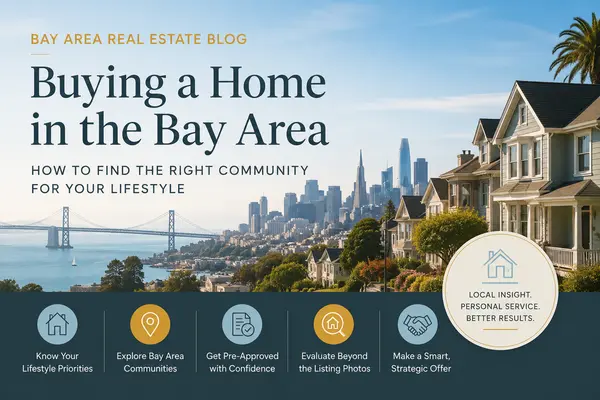
Buying a Home in the Bay Area: How to Find the Right Community for Your Lifestyle
Buying a Home in the Bay Area: How to Find the Right Community for Your Lifestyle The Bay Area offers one of the most diverse real estate markets in California. From energetic urban neighborhoods and established suburban communities to waterfront properties and homes surrounded by open space, buyers
LEAVE A REPLY